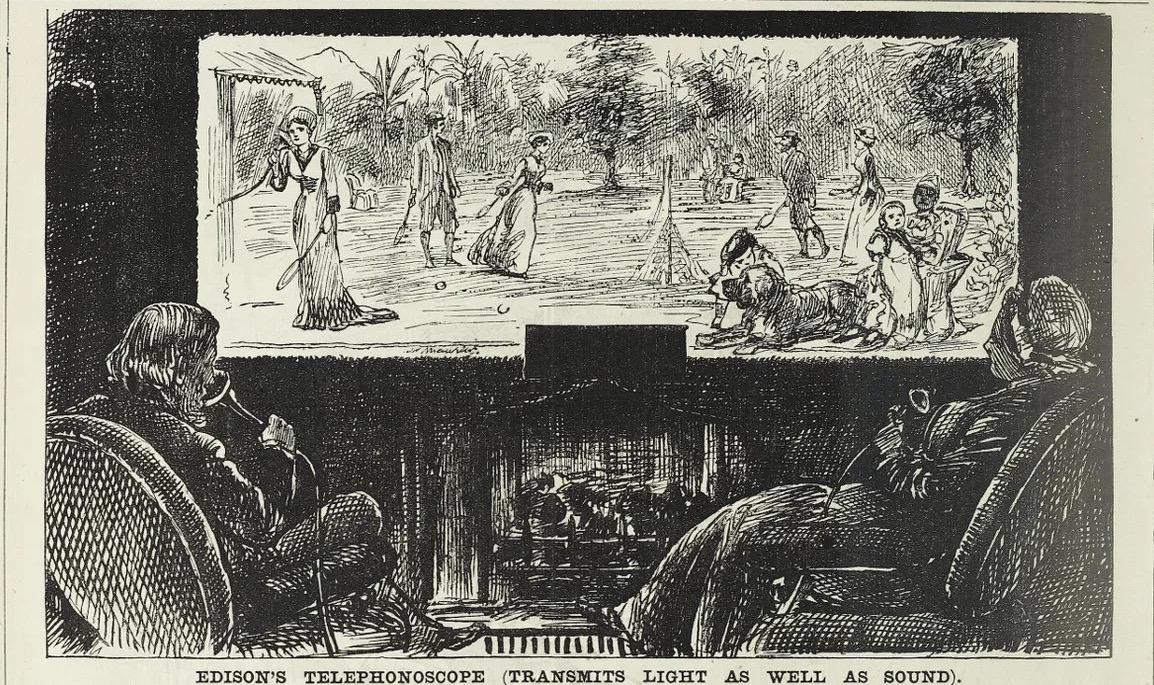
For the past fifty years, software was built for humans.
We argued about fonts. We ran usability studies. We hired designers to make a button feel inevitable. An entire civilization of pixels grew up around a single assumption: that on the other side of the screen, there was a person.
That assumption is quietly dissolving.
Anthropic now ships finance agents. Excel has an AI co-pilot. Every week, another category of work moves from human hands to agent hands. The screen is still there, but increasingly, no one is looking at it. The software talks to the AI. The AI talks to the human. And the human, more and more, just talks.
Notice what this does to the old hierarchy. For decades, applications sat at the center and humans reached toward them through interfaces. Now the AI sits at the center, and applications reach toward it through APIs. The cathedral has been turned inside out.
We are told this is good news for software companies. "Expose an MCP server, plug into the agents, ride the wave." Perhaps. But consider what a plug-in actually is. It is a clean specification of what your software does. And a clean specification is the easiest possible thing for another AI to reimplement on a quiet afternoon.
The moats of the old world — the elegance of a layout, the warmth of a brand, the muscle memory of a thousand returning users — do not survive in a world without eyes. Headless software does not care how it feels. It only cares whether it works.
So we arrive at a strange question. When the interface disappears, what is a software company actually selling?
Not beauty. Not familiarity. Possibly not even functionality, since functionality is exactly what agents are learning to grow on their own.
What remains, I suspect, is narrower and older than we like to admit: data nobody else has, judgment built up over years of specific decisions in a specific domain, and memory that compounds with a particular customer over time. The things that cannot be specified in a schema. The things an agent cannot simply rewrite over coffee.
The software industry spent half a century learning to serve humans. It now has a few short years to figure out what it offers a world where humans are no longer the primary user.